Showing posts with label law. Show all posts

Thursday, September 20, 2018

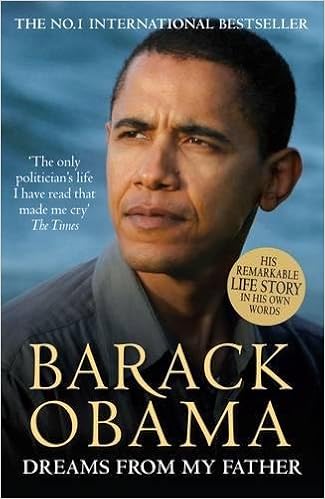
Book Recommendation: Dreams from My Father

Image result for dreams from my father

My latest read is Dreams from My Father: A Story of Race and Inheritance by former president Barack Obama. The book is a memoir, first published in 1995 that recounts Obama's early life leading up to his enrollment at Harvard Law School. Throughout the book, Obama takes a deep dive into exploring the many experiences he faced growing up as a young biracial man in America. Dreams from My Father is split into three parts, which represents three distinct chapters in his life. The first part is titled "Origins", and analyzes his childhood experiences in Hawaii and Indonesia. He speaks on his relationship with his grandparents, his mother, and the one time in which he was able to meet his father. As you will see by reading, Obama's relationship with his father is a recurring theme throughout the book. He often struggles with the contrast between the physical distance of his father living in Kenya and the intangible influence that follows him around the globe. The second part ,"Chicago", speaks on Obama's time as a young community organizer in the city's South Side. Readers are able to gain a sense of the beautiful struggle that created an intimate bond between Obama and the city of Chicago. It is amazing to see how this period foreshadowed the rise of the future politician. The final part is titled "Kenya", in which Obama takes readers along for the monumental journey of visiting his father's home country. In Kenya, Obama meets members of his paternal family and learns of his rich ancestral history. This was an incredibly powerful part of the book, as Obama is able to gain a sense of himself through exploring this vital piece of his identity. I enjoyed Dreams from My Father not only for its autobiographical perspective of a future world leader, but also for what it had to offer in its story of self-discovery and interconnection of culture. I encourage you to check out this powerful memoir for yourself, which you can do by ordering using the link below. Thanks for reading!

https://www.barnesandnoble.com/w/dreams-from-my-father-barack-obama/1100832650#/ 

Friday, July 20, 2018

Book Recommendation: My Bondage and My Freedom

See the source image

One of my most recent reads is the second autobiography written by Frederick Douglass titled, My Bondage and My Freedom. The book is a thrilling first-person account about the life of Douglass through his years as a slave and his journey to becoming a freeman. I learned a great deal about Douglass through reading this book and was inspired by his turbulent quest to liberty. He truly transformed his life by educating himself and sought to dedicate his life toward fighting against the slave system. In My Bondage and My Freedom, Douglass provides readers with a window into his thoughts as he faced abuse from slave masters, criticism against his intellect, and inner-conflict as he sought to emancipate himself from the bondage that had held him captive since birth. Through reading this account, I believe we can gain great insight into this period of our nation's history as well as a deeper appreciation for the many individuals that have heroically sought to provide all Americans with the rights to life, liberty, and the pursuit of happiness. The life of Frederick Douglass is an extremely intriguing story, and I could definitely see a great film being adapted from this autobiography. I strongly recommend checking out this compelling book or at least doing some research on the life of Frederick Douglass. Thanks for reading!

https://www.barnesandnoble.com/w/my-bondage-and-my-freedom-frederick-douglass/

Thursday, February 1, 2018

Ordering Equality: A Reflection on the Greensboro Four

Related image

The scene is February 1, 2018. I walk into a Starbucks, and stand in line. I gradually get closer to the register with my order in mind. I’m finally face to face with the cashier, and I place my simple yet usual order, “ a grande hot coffee.” The cashier enters in my order, and gives me my total. I hand her the due amount, and she hands me my coffee. Upon observation of this transaction, one would deem it normal. However, let us take a step back 58 years prior, and try to play out a similar situation. Four college freshmen are in a Woolworth's. They take a seat at a lunch counter, and place an order for a cup of coffee. The staff refuses to serve them, as store policy prohibits service for the men at the "whites only" counter. The men refuse to accept this denial of service, and remain seated at the counter. Despite requests and glares from other patrons, they remain seated in these seats until the store closes. The impact of this day would mark the birth of a monumental revolution in American history. It was the birth of the sit-in movement, an effort that served as a catalyst for the Civil Rights Movement. On this day, these college freshmen exhibited resilience, courage, and passion in the face of injustice. These were educated individuals who simply requested service, but were denied on the basis of their appearance. This day inspired a movement that would make waves across the country. As a college freshman myself, I can only imagine the valor it took to execute such a plan. This effort exhibits an example of pure leadership. Four men willing to walk into dangerous territory, and attempt to improve society. Imagine yourself as a black man in 1960, attempting to defy a white establishment. A period in which you can't even rely on the police to protect you. On this date of February 1st, it is important that we honor the heroic actions of these four men. It is with extreme gratitude that I commend the efforts of Joseph McNeil, Franklin McCain, Jibreel Khazan (formerly Ezell Blair Jr.) , and David Richmond. On February 1, 1960, these men placed a tall order. They ordered equality. They ordered first-class citizenship. They ordered a better America. Let us take this day to reflect on the efforts of these four men, and their contributions to our society. On this day in history, an entire nation was served at a single lunch counter.

Monday, November 27, 2017

The Man Within Me: A Singular Perspective of the Collective African-American Struggle


A man has been abducted from his home, and is displaced into a foreign land. He is stripped of all ties to his home; and is forced into a language, a religion, and a law to abide by. He is also forced to labor for his kidnapper. This labor is excruciating, and takes a toll on him physically, mentally, and spiritually. He labors for so long that he builds wealth for the kidnapper and others in the land, with nothing to show for himself. He tried many times to escape. He tried to run away, he tried to articulate his struggles to the masses, he even tried to kill his kidnapper. These attempts only led to worse punishment. It wasn't until outside forces realized this situation was wrong, and joined him in the fight to achieve freedom. This achieved freedom is worth celebrating, but his struggle doesn't stop there.

Upon freedom, he is set out into the world. He has no remembrance of life before the kidnapping. All he knows is this foreign land, and the struggle he has endured. Now, his best option is to try to make it in this foreign land. There's a problem though. The people of this land do not accept him. They refuse to associate with him, and regard him as inferior. They refuse to eat with him, refuse to go to school with him, and even refuse to use the same bathroom as him. How can he succeed in a society that doesn't allow him to participate? He is forced on his own. He is able to do some amazing things on his own. He starts successful businesses, creates beautiful art, and is even able to invent. There's a problem though. Anytime he builds a business, creates a piece, or invents; his work is destroyed, stolen, and he never receives due credit. He realizes he's in a lose-lose situation. Things must change.

He begins to organize, and advocate for his fair treatment. This organization is pivotal, but he still faces internal struggles. Part of him wants to continue to fight for equality in this land, and part of him wants to go back to the land he was abducted from. Nonetheless, he expressed his struggle to the world. He's been mistreated, excluded from society, and disconnected from his history. This land he made wealthy has treated him like anything but human. He was even forced to fight for this land in war, knowing that they treated him like an enemy. It was important for his story to reach a wide audience. The word is spread, and his story becomes a highly publicized issue. Others join him in the fight for equal treatment in this land, this land which ought to be considered his home after all these years. This battle for equal treatment is hard-fought. It takes protests, arrests, and even deaths for him to receive the rights of a human being. It's a slow process, but eventually the government of this land prohibits discrimination against this man. Another step in the right direction, but it doesn't stop there.

Although it's now unlawful to discriminate against him, he still faces injustice. It turns out that the hate against him is engrained in the society. The society has painted him as a villain, someone to be feared. He now faces an institutional struggle. It's hard for him to attain a job, find quality housing, and receive proper education. It seems that the law wasn't able to rewire the perception of him among citizens of the land. He realizes he is still not accepted. He has to find an alternative way to survive. This causes him to fall into all sorts of traps. One of his biggest traps was drugs. Drugs led him to multiple arrests, and nearly destroyed him internally. This continued mistreatment led to frustration, which he sometimes expressed through violence. Although the government now called for his equal treatment, this was still a dark period for him. He had to develop consciousness, and learn to love himself despite all the madness he faced. This included looking back on his struggle, finding some peace within himself, and building off the great contributions to society that he never received credit for. Things have improved from this period, but the struggle continues.

The man still lives today. He lives with anxiety that the pattern of his history will repeat itself. He lives with curiosity of who he was before the kidnapping. He lives with pressures of society that try to box him in. He lives with an education system that tries to marginalize his contributions to society. He lives with those that try to disregard his struggle, and encourage him to simply move on. He lives with those that tell him to leave the land he helped build, and go back to the land he was abducted from. He lives with the scars and internal struggles of his journey. Most importantly, he lives. He lives in my ancestors. He lives in my family. He lives in me.