Showing posts with label society. Show all posts

Monday, May 19, 2025

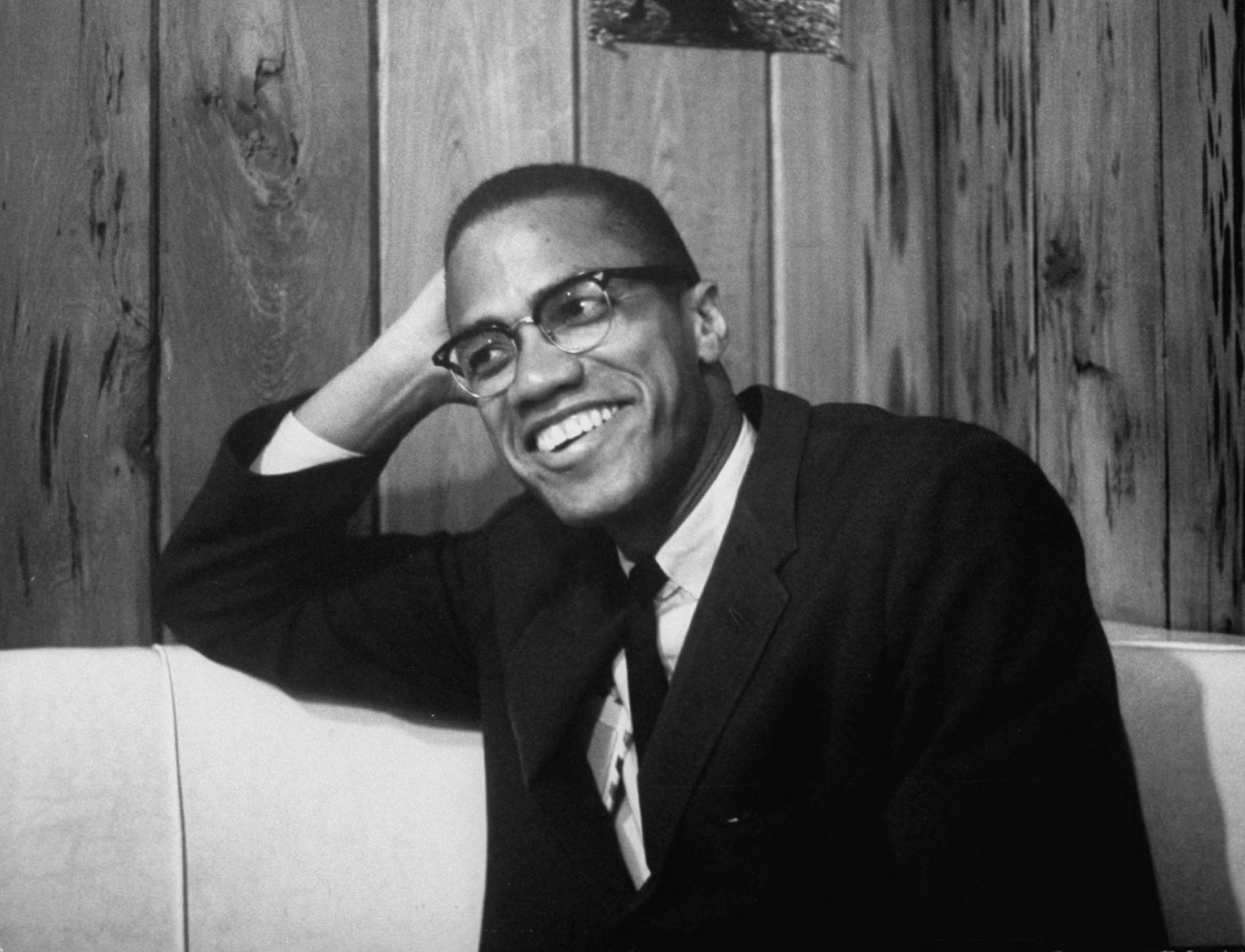
Reflecting on the 100th Birthday of Malcolm X


On May 19, 2025, we commemorate the 100th birthday of el-Hajj Malik el-Shabazz, most commonly known as Malcolm X. A visionary leader before his tragic assassination in 1965, X’s legacy continues to inspire people facing social injustice across the globe. His story and words have left a powerful testament explored in many books, films, and documentaries since his passing. 

I was about ten when my dad showed me a copy of The Autobiography of Malcolm X and said it was a book that every Black man should read. I immediately tried to dive into it but was too young to comprehend the text and grapple with the depth of subjects that arise in the book. It wasn't until high school and again in college, that I was able to really sit with The Autobiography of Malcolm X. The autobiography, co-written with Alex Haley and posthumously released in 1965, is considered the most comprehensive account of X's life. It takes readers from X's childhood in Michigan to his rise as one of the world's most influential figures in the 1960s. The vivid first-person narration brings readers into the perspective of X at these different points in his life. I've heard many people describe the impact The Autobiography of Malcolm X had on them. One common theme described is the drastic transformation that occurs from X's life as a street hustler to his leadership role in the Nation of Islam, departure from the organization, and pilgrimage to Mecca. 

Through X's story, we see the pain that is both necessary for and often a product of growth. For example, X's imprisonment led to his embarkment on a quest for knowledge and spiritual transformation. In college, an English professor of mine assigned reading from an excerpt of The Autobiography of Malcolm X titled, "Learning to Read". In the excerpt, X describes teaching himself to read in prison by copying from a dictionary. He states, "I could for the first time pick up a book and read and now begin to understand what the book was saying. Anyone who has read a great deal can imagine the new world that opened... In fact, up to then, I never had been so truly free in my life." From this brief but powerful quote, we see the significant shift in X's outlook during that time. As much as we learn about the positive aspects of transformation in X's life, The Autobiography of Malcolm X also recounts the resistance he faced separating from the organization that changed his life and in which he changed the lives of countless others. As X separated from the Nation of Islam, he faced hostile intimidation and remained a controversial figure in the mainstream press. Despite a more universal lens and willingness to work with leaders across organizations, X faced backlash for speaking truth to power.

On the 100th birthday of Malcolm X, we have an opportunity to celebrate and reflect on the legacy of a man that continues to be felt 60 years after his passing. As a leader, he fearlessly advocated for the causes of his people at a time when society relegated their sufferings to the margins. He demonstrated a journey of self-transformation that inspires people overcoming incarceration, addiction, and other struggles. Anytime I hear one of his speeches or interviews, the conviction in his voice alone inspires me to lead a life of purpose. Malcom X consistently spoke his truth no matter how uncomfortable that truth made others feel. We can only imagine what further impact Malcolm X would have made had his life not been tragically cut short at age 39. What's for certain, is that there is a lot to be learned from the life and legacy he left behind. Let us continue to uphold the memory of Malcom X and other leaders whose powerful life stories can enrich our own. 

Wednesday, June 12, 2019

Reflecting on My Trip to Kenya!


During the month of May, I was privileged to participate in the Community-Based Global Learning program in Kenya through my university. I, along with fellow students and staff, traveled to the East African country for an exciting two weeks of experiential education and cultural immersion. The trip was facilitated by EDU Africa, an organization that provides "transformative learning journeys" in various countries throughout the continent. Our journey provided an array of opportunities for learning, as the EDU Africa team had numerous experiences in store for us. We engaged in activities that allowed us to build meaningful relationships and engage with the people and places that we visited. I wish that I could bottle up my experience and sell it to you, but for now we'll have to settle with this blog post. In the following paragraphs, I'll provide you with some of the highlights from this amazing trip.

Prior to our arrival, each member of our group was given service-learning placements with one of three local organizations in the town of Limuru. These incredible organizations were Limuru Children's Centre, Limuru Cheshire Home, and Plants for Life. I volunteered with Plants for Life, which works in reforestation and environmental conservation at the campus of Brackenhurst, an international conference and learning center. It was a pleasure to connect with such passionate individuals, who were able to teach me a lot about the local ecosystem and the amazing power of plants that have aided mankind for centuries. The area we worked in had tremendous biodiversity, with both indigenous and exotic species of plants. We assisted in gratifying and fulfilling work, such as the collection and planting of seeds, landscaping, and helping children at a nearby school create a butterfly garden. We also participated in a tree planting venture of over 500 trees in the Kereita forest, which provides a water catchment area to help the local community attain water. It felt special to know that the work I was engaging in would yield results long after I had left.

When we weren't at our service-learning sites, we were engaging in activities that taught us about the rich culture and history of the area we were visiting. One such experience was listening to speakers from the Lari Memorial Peace Museum. They spoke to us about the Mau Mau Uprising, which helped bring about Kenya’s independence from Britain in the mid-20th century. Two of the speakers were involved in the conflict and were members of the opposing sides, one having been a Mau Mau Freedom Fighter and the other a British loyalist. They talked about the destruction that the war had caused and how it divided the people. Further, they discussed their efforts to bring peace and unity once the country gained its independence. In order to unite, they had to see the humanity in people that they had previously saw as enemies. It was important for them to honestly deal with the past and to start working together for a brighter future. Since, the Lari Memorial Peace Museum has sought to preserve this history and to keep future generations from repeating past mistakes. I found the account of peacemaking to be inspiring, and one that should be shared around the globe. Hearing such a powerful lesson made this one of the most impactful experiences from the trip.

During the trip, it was great to spend time in the town of Limuru and being able to gain a sense of what everyday life is like in the community. Through some of our activities, we had opportunities to interact with members of the community and learn more about Kenyan culture. We participated in a market challenge, where we divided into teams to see who could bargain for the best quality produce. We had a cooking lesson with host families, who showed us how to prepare proper Kenyan cuisine. We toured a local tea farm, where we learned about the history and production of Kenya’s largest export. We dined at The Lake House Tigoni, a beautiful estate that provided magnificent views of the area. The most special activity we engaged in was putting on a sports day for children at Limuru Children’s Centre. We organized stations of soccer, dance, coloring, and jewelry making for the children to participate in. It felt great to spend time with them for an afternoon of fun and laughter. Through time spent in the community, we were able to learn a lot and create some of our best memories.

Halfway through the trip, we departed Limuru and headed westward to the Maasai Mara. It was a long and beautiful journey that allowed us to see the countryside, including a view of the Great Rift Valley. In the Maasai Mara, we were spending a weekend on safari and learning about the Maasai tribe. We stayed at the Naboisho Camp in the Mara Naboisho Conservancy, where we were provided a luxurious experience throughout our stay. We were led by Maasai guides, who possessed a wealth of knowledge about the land and the animals that inhabited it. I was amazed by the vast open landscape, which provided a great view of the sky and hills in the distance. While on game drives, we were fortunate to see a variety of animals and learn about their lifestyles and behavior. It was surreal, being so close to lions, giraffes, wildebeest, hippos, and many other species. One of my favorite moments was seeing a hungry lioness hunting for her cubs. We didn’t see her succeed, but it reminded me of the strength that mothers of all species exhibit to care for their young. At times on the drives, we would step off to eat and admire the view. On our first night, we found a clear area and viewed the Moon, which looked brighter than I had ever seen it before. The safari was a thrilling experience and a wonderful opportunity to see nature in its purest form. Also, while in the Mara, we were fortunate to be received at a Maasai village. While there, we spent time in homes and learned about Maasai culture. The people there were very welcoming and taught us a lot about their way of life. On our last day in the Mara, we visited the Maa Trust. The Maa Trust is an organization that engages in projects to conserve the environment and assist families in the community. We met women producing Maa beadwork, which has helped provide an impactful source of income for women in the area. It was special to see how they were creating a better future for themselves by incorporating traditional elements from their culture. Our weekend in the Mara had a lot to offer and was definitely a highlight of the trip. It was a dream worthy excursion, that our group would talk about frequently for the rest of our time in Kenya.

On our last day in Kenya, we were reminded to recognize our trip as a real experience. It seemed incredible that we were able to build relationships, create memories, and learn so much in the short time that we were there. During our final group reflection session, we shared our biggest takeaways from the trip. The lesson I shared was about the power of cross-cultural communication. Through interacting with the people there, I was able to experience the impact of trading perspectives with someone that comes from a different part of the globe. When respectful and honest, these conversations can make everyone involved a more enlightened individual. I enjoyed my time in Kenya, and I am grateful to have had the opportunity to participate in the Community Based Global Learning program. This trip provided me with unique experiences and helped me further my education as a global citizen.
Sunday, June 9, 2019

Book Reflection: We Gon' Be Alright

Image result for we gon be alright jeff chang

My latest read is the book, We Gon' Be Alright: Notes on Race and Resegregation by Jeff Chang. The book, first published in 2016, is a collection of essays that analyzes recent issues concerning race in America. Chang takes on many pressing topics including institutional diversity, student protests, cultural equity, urban displacement, and the protests in Ferguson. One common thread that permeates through the book's chapters is resegregation. In his introduction, Chang writes that "even as we have come to mostly celebrate 'diversity,' resegregation is happening all around us: in our neighborhoods and schools, our colleges and universities, even in the culture." This sentence helps set the stage as Chang goes on to highlight the divisions and inequities that still exist in our "post-racial" society. We Gon' Be Alright does an excellent job of discussing social phenomenons that many people feel, but aren't able to articulate. In his diagnosis of issues plaguing American society, Chang provides historical context that helps readers view today's conditions from a broader perspective. Such a timeline of policies and cultural shifts help show that the things we see today don't just happen by chance. Reading this book opened my eyes to the work that still needs to be done to create an equitable society. Though there appears to be progress, racial and economic disparities still exist that significantly affect quality of life for many Americans. These divisions propagate tensions that come to haunt us at times in tragic occurrences. This book details an urgent need for us to begin viewing our future as a nation as interconnected. Chang writes of his own experience as an Asian-American, which highlights the complexities that shape race relations and identity in America. In his conclusion, Chang expresses how critical it is for us to see the humanity in our fellow citizens. It is difficult to read of the pain that has been inflicted upon marginalized members of our society. However, it is necessary to discuss if we are to ever see true progress. We Gon' Be Alright is an insightful dissection of our current times and deserves to be read by all Americans. You can order using the link below. Thanks for reading!

https://www.amazon.com/We-Gon-Be-Alright-Resegregation/dp/0312429487

Saturday, October 6, 2018

Book Recommendation: The Anatomy of Peace


My latest read is The Anatomy of Peace: Resolving the Heart of Conflict  by The Arbinger Institute. The book, first published in 2006, uses a powerful narrative that provides you with the tools to combat conflicts at work, school, and in the home. Set at a teen rehabilitation center in Arizona, a group of parents dropping their children off engage in a moving discussion with the center's counselors. Through this discussion, the parents are challenged to re-evaluate their interactions with others, and to begin living in a way that promotes peace. One central idea in this book is transitioning from a heart at war to a heart at peace. It teaches how we often betray our human sense of compassion by treating others as objects instead of people. Further, it discusses how we seek to justify our self-betrayal by constructing boxes of better-than, need-to-be-seen as, and I-deserve complexes. The book uses several real-world examples to illustrate how both sides of a conflict can play a role in maintaining tension. A major lesson I learned from The Anatomy of Peace, is that we must evaluate areas where we need to improve before we can expect a change in others. By using a story, the concepts in this book are both relatable and easy to digest. By adopting the concepts in this book, I sincerely believe that we could begin to work through the many conflicts that exist in today's world. In general, we don't often consider how the opposing party of a conflict is affected by our actions. We tend to get so caught up in winning the conflict that we disregard the humanity of the other party. This book will help you take on a new perspective that both encourages you to consider the humanity in all people and to interact in a way that works in the best interest of all. I strongly recommend checking out The Anatomy of Peace. Feel free to order using the link below. Thanks for reading!

https://www.barnesandnoble.com/w/the-anatomy-of-peace-the-arbinger-institute/1107766563;jsessionid=F7DD404A59D1A6AEA9C62A43E9E123FE.prodny_store01-atgap13?ean=9781626564312

Thursday, September 20, 2018

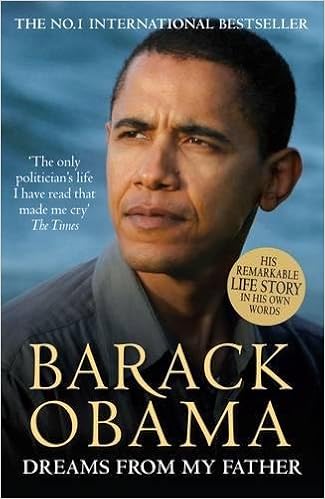
Book Recommendation: Dreams from My Father

Image result for dreams from my father

My latest read is Dreams from My Father: A Story of Race and Inheritance by former president Barack Obama. The book is a memoir, first published in 1995 that recounts Obama's early life leading up to his enrollment at Harvard Law School. Throughout the book, Obama takes a deep dive into exploring the many experiences he faced growing up as a young biracial man in America. Dreams from My Father is split into three parts, which represents three distinct chapters in his life. The first part is titled "Origins", and analyzes his childhood experiences in Hawaii and Indonesia. He speaks on his relationship with his grandparents, his mother, and the one time in which he was able to meet his father. As you will see by reading, Obama's relationship with his father is a recurring theme throughout the book. He often struggles with the contrast between the physical distance of his father living in Kenya and the intangible influence that follows him around the globe. The second part ,"Chicago", speaks on Obama's time as a young community organizer in the city's South Side. Readers are able to gain a sense of the beautiful struggle that created an intimate bond between Obama and the city of Chicago. It is amazing to see how this period foreshadowed the rise of the future politician. The final part is titled "Kenya", in which Obama takes readers along for the monumental journey of visiting his father's home country. In Kenya, Obama meets members of his paternal family and learns of his rich ancestral history. This was an incredibly powerful part of the book, as Obama is able to gain a sense of himself through exploring this vital piece of his identity. I enjoyed Dreams from My Father not only for its autobiographical perspective of a future world leader, but also for what it had to offer in its story of self-discovery and interconnection of culture. I encourage you to check out this powerful memoir for yourself, which you can do by ordering using the link below. Thanks for reading!

https://www.barnesandnoble.com/w/dreams-from-my-father-barack-obama/1100832650#/ 

Thursday, February 1, 2018

Ordering Equality: A Reflection on the Greensboro Four

Related image

The scene is February 1, 2018. I walk into a Starbucks, and stand in line. I gradually get closer to the register with my order in mind. I’m finally face to face with the cashier, and I place my simple yet usual order, “ a grande hot coffee.” The cashier enters in my order, and gives me my total. I hand her the due amount, and she hands me my coffee. Upon observation of this transaction, one would deem it normal. However, let us take a step back 58 years prior, and try to play out a similar situation. Four college freshmen are in a Woolworth's. They take a seat at a lunch counter, and place an order for a cup of coffee. The staff refuses to serve them, as store policy prohibits service for the men at the "whites only" counter. The men refuse to accept this denial of service, and remain seated at the counter. Despite requests and glares from other patrons, they remain seated in these seats until the store closes. The impact of this day would mark the birth of a monumental revolution in American history. It was the birth of the sit-in movement, an effort that served as a catalyst for the Civil Rights Movement. On this day, these college freshmen exhibited resilience, courage, and passion in the face of injustice. These were educated individuals who simply requested service, but were denied on the basis of their appearance. This day inspired a movement that would make waves across the country. As a college freshman myself, I can only imagine the valor it took to execute such a plan. This effort exhibits an example of pure leadership. Four men willing to walk into dangerous territory, and attempt to improve society. Imagine yourself as a black man in 1960, attempting to defy a white establishment. A period in which you can't even rely on the police to protect you. On this date of February 1st, it is important that we honor the heroic actions of these four men. It is with extreme gratitude that I commend the efforts of Joseph McNeil, Franklin McCain, Jibreel Khazan (formerly Ezell Blair Jr.) , and David Richmond. On February 1, 1960, these men placed a tall order. They ordered equality. They ordered first-class citizenship. They ordered a better America. Let us take this day to reflect on the efforts of these four men, and their contributions to our society. On this day in history, an entire nation was served at a single lunch counter.