Once
in a while, we come across art that encapsulates a moment in history. These
works have the power to seemingly transport us to the period in which they were
created, imparting the perspective of a time that we've never experienced. This
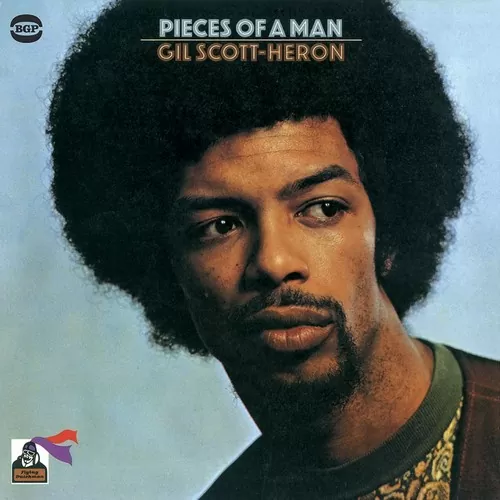
is how I felt when I first heard Gil-Scott Heron's debut studio album, Pieces of a Man. Released in 1971, the album is a genre-bending
11-track journey containing elements of soul, blues, jazz, funk, and spoken
word. Through each song, Scott-Heron melodically grapples with topics ranging
from social inequalities to the personal struggles of addiction. The most
widely known track on the album is the opening "The Revolution Will Not Be
Televised", which has been immortalized for its poetic call to action.
Scott-Heron has expressed that the song is about the change that you must make
in your mind before you can change the way that you live. At the
conclusion of this track, we transition into the serene “Save the Children”,
one of my favorite songs on the album. The lyrics serve as a captivating plea
to make the world a better place for the youth that follow in our footsteps. Scott-Heron
sings “right now they seem to play such a small part of the things that they’ll
soon be right at the heart of.” I appreciate the way in which Scott-Heron
conveys emotion through his vivid lyricism. This emotion helps the listener feel
the gravity of issues that he grapples with through each song. On the title
track, “Pieces of a Man”, we hear a narrator recount the tumultuous experience
of his father being laid off. He sings “I saw him go to pieces, he was always
such a good man.” In the closing track, “The Prisoner”, Scott-Heron articulates
the damage caused to a family when a man is “hounded by hatred and trapped by
fear.” The song seems to describe both a literal and figurative prison that has
left the man feeling unseen and unheard. When we consider the context in which Pieces
of a Man was released in the early 1970s, the subject matter on this album
is even more compelling. This period followed the strife of the 1960s and saw a
carryover of the Vietnam War, the Black power movement, and the dawning of an
economic recession. This atmosphere is conveyed through tracks like “A Sign of
the Ages” and “The Needle’s Eye”. On the
latter, Scott-Heron sings “All the millions spent for killing, seems the whole
world must be dying; all the children who go hungry, how much food we could be
buying.” The song captures the sorrow of someone observing these world crises
with little power to change them. While societal issues are a prominent theme
on the album, Scott-Heron also provides tracks that are more introspective. Songs
like “Home Is Where the Hatred Is” and “I Think I’ll Call It Morning” paint the
picture of a man seeking to find solace within his environment. We also get
songs like “Lady Day and John Coltrane” and “When You Are Who You Are” that are
both uplifting and reassuring. The breadth of emotions and subject matter on
this album certainly fits the title. Pieces of a Man showcases the
complexities within an individual just trying to make it through life. Scott-Heron
demonstrates the ebbs and flows of the human experience through each track in a
way that allows the listener to step into the world as he sees it. On “Or Down
You Fall”, Scott-Heron sings “and now you know I’m only human instead of all
the things I’d like to be, the world is just a simple circle, you’ve got to
keep on turning.” These lines stand out to me because they demonstrate the power
in learning the “pieces” of a person’s story. Through this learning we build a
deeper appreciation of that person’s humanity. People, like the world, are much
more complex than we perceive them to be. Over 50 years later, Pieces of a Man contains
messages that I believe can inspire and connect with people today.
Showing posts with label African-American. Show all posts
Friday, March 1, 2024
Classic Album Reflection: Pieces of a Man
Monday, April 1, 2019
Book Reflection: Shook One
My latest read is Shook One: Anxiety Playing Tricks on Me by Charlamagne Tha God. The book is the author's second piece of work following his New York Times bestseller, Black Privilege. In Shook One, Charlamagne develops an enlightening conversation regarding mental health. He discusses his own experience dealing with mental health issues and encourages readers to embark on their own journey towards healing their mind. He provides deeply personal life stories that express his struggles with anxiety, depression, and post-traumatic stress disorder. Further, he relates his experience to others in the Black community. Through this book, Charlamagne advocates for the need of increased attention paid toward the mental health of Black Americans. He analyzes the many factors that deter Black Americans from therapy such as cultural perception, self-medication, and lack of access. Charlamagne dedicates chapters to these factors among others to help readers gain a sense of how we can overcome these obstacles on our mental health journey. It is apparent that Charlamagne did his research in writing Shook One, but the book also contains expert advice from psychiatrist, Dr. Ish Major. Through reading the book, I appreciated the way Charlamagne frames each topic through his own narrative. His willingness to open up about his experiences makes the book a powerful read. His growth from being a drug dealer in Moncks Corner, South Carolina to becoming a nationally-syndicated radio host is certainly inspiring. In Shook One, Charlamagne acknowledges both the good and bad that molded him into the successful public figure he is today. He presents his stories in a way that is both humorous and impactful, which keeps you from wanting to put the book down. Reading this book, I noticed parallels to my own mental health journey. I too engage in counseling, meditation, and regulation of social media to protect and enhance my mental wellbeing. I recommend checking out Shook One, and assessing how you are investing time and attention towards your mental health. Feel free to order a copy using the link below. Thanks for reading!
https://www.barnesandnoble.com/w/shook-one-charlamagne-tha-god/1128615643?ean=9781982109820#/
Labels:
African-American,
black,
book,
career,
Charlamagne Tha God,
creativity,
culture,
entertainment,
fun,
happiness,
health,
hip-hop,
inspiring,
literature,
mental health,
philosophy,
rap,
review,
Shook One,
urban
Wednesday, February 13, 2019
Book Reflection: Becoming by Michelle Obama
My most recent read is Becoming by former first lady, Michelle Obama. The book is a memoir that covers Obama's early life and years in the White House. Through her retelling of past life stories, she provides readers with insight into the experiences that made her the woman she is today. From home piano lessons in Chicago to state visits at Buckingham Palace, Mrs. Obama paints vivid recollections of some of her life's most meaningful memories. I learned a great deal through reading Becoming and gained a newfound respect for the position of first lady. I enjoyed the behind-the-scenes stories about the campaign trail and life inside the White House. This memoir is very honest and helps readers see the humanity in one of the most prominent figures of our time. As a college student, reading this book was very impactful, as it exemplified the surprises that life can present. I found her early quest for fulfillment and meaning to be relatable, as I often ask such questions of myself today. It was also nice to read about her interactions with Americans throughout the years. She beautifully writes about the families, children, and service members that helped shape her experience as first lady. Mrs. Obama's commitment to making a difference during her time as first lady was truly amazing. In an unpaid position, she fought relentlessly for the causes of childhood obesity, healthy eating, female education, and college accessibility. She was able to gracefully balance the demands of being a public figure, a mentor, a wife, and a mother. Through the telling of her story, Michelle Obama encourages others to appreciate the uniqueness and authencity in their own. Becoming is a truly inspiring memoir that can be enjoyed by people of any background. I highly recommend checking this book out for yourself. Feel free to order using the link below. Thanks for reading!
https://www.barnesandnoble.com/w/becoming-michelle-obama/1128038172?ean=9781524763138#/
Labels:
African-American,
autobiography,
becoming,
black history,
book,
creativity,
culture,
first lady,
inspiring,
literature,
Media,
memoir,
michelle Obama. barack Obama,
news,
politics,
president,
Washington
Friday, August 31, 2018
My Awakening

It seemed like any
ordinary day in my middle school experience. I had taken the two-hour bus ride
from home, with my sights set on finishing my seven-hour shift and returning
back to my PlayStation. Little did that young twelve-year-old know, that the
perception through which he viewed society and himself would on that day change
forever. Up to that particular day in my life, I innocently viewed my world as
a place where other’s perception of me was solely based on my character. I had
heard of America’s dark past, but I naively believed that we had all overcome
the ludicrous sentiments that were prevalent in the time of my grandparents and
earlier generations. It was not until that morning period in sixth-grade
language arts that I realized my appearance was subject to being associated
with cruel and demeaning stereotypes.
My teacher was introducing the class to a new research
assignment. It was a paper in which we were to study the neurological effects
of any topic of choice. The example provided, which the teacher read aloud, was
on a street drug known as “crack”. In one of the sentences of the example, the
term “crack baby” was used. I then found out that one of my classmates said my
name to a group of kids when that term was read by the teacher. As one of two
Black students in the class, it was apparent that this remark was made about my
race. Though long ago, I can still recall the painful sensation that took place
when I heard those words. I felt isolated from the rest of my classmates,
consumed by a combination of anger and sadness. This event marked a dramatic
shift in my mindset.
From that day on, I never truly felt accepted into
American society. It showed me that no matter how intelligent, successful, or
well-mannered I thought myself to be, I could still encounter people that
sought to confine my existence within their lines of distasteful preconceived generalizations.
I was moved to discover how such generalizations could be made on something as
trivial as skin color. I began to read books that elevated my consciousness of
the Black American experience. It was comforting to see how others have
encountered similar experiences to the one I had on that day in sixth grade. I
became more aware of the atrocities that have affected Black Americans for
centuries and I even viewed myself in a different light. With my life I was
working to prove a more positive perception of Black Americans.
Though spawned from a negative experience, I consider my
altered state of perception to have had a desirable impact. It motivated me to
discover more about my identity as a Black American. It taught me that
America’s dark history still seeps through the cracks into our current society.
This altered state of perception was vital for my growth towards viewing the society
in which I live through a more enlightened lens.
Labels:
African-American,
america,
black,
black history,
blog,
culture,
essay,
family,
future,
growth,
historical,
inspiring,
journalism,
leadership,
literature,
motivation,
opinion,
trendy,
urban
Friday, July 20, 2018
Book Recommendation: My Bondage and My Freedom
One of my most recent reads is the second autobiography written by Frederick Douglass titled, My Bondage and My Freedom. The book is a thrilling first-person account about the life of Douglass through his years as a slave and his journey to becoming a freeman. I learned a great deal about Douglass through reading this book and was inspired by his turbulent quest to liberty. He truly transformed his life by educating himself and sought to dedicate his life toward fighting against the slave system. In My Bondage and My Freedom, Douglass provides readers with a window into his thoughts as he faced abuse from slave masters, criticism against his intellect, and inner-conflict as he sought to emancipate himself from the bondage that had held him captive since birth. Through reading this account, I believe we can gain great insight into this period of our nation's history as well as a deeper appreciation for the many individuals that have heroically sought to provide all Americans with the rights to life, liberty, and the pursuit of happiness. The life of Frederick Douglass is an extremely intriguing story, and I could definitely see a great film being adapted from this autobiography. I strongly recommend checking out this compelling book or at least doing some research on the life of Frederick Douglass. Thanks for reading!
https://www.barnesandnoble.com/w/my-bondage-and-my-freedom-frederick-douglass/
Labels:
African-American,
art,
black history,
book,
culture,
Frederick Douglass,
historical,
history,
inspiring,
law,
leadership,
literature,
My Bondage and My Freedom,
opinion,
philosophy,
politics,
reality,
review,
sociology
Sunday, April 15, 2018
Reflecting on Jackie Robinson Day
Often times in life, we face moments in which our character is tested. There are times when we must think beyond ourselves and immediate desires, to consider the ripple effect of our actions. It is a rough journey, where obstacles of fear and self-doubt must be overcome. These are the moments that separate the hero from the commoner. Reflecting on examples of these moments is important, as it inspires us to act courageously when our own character is tested. On April 15, 1947, Jackie Robinson faced such a test when he took the field in his Major League Baseball debut. Coming out of the Brooklyn Dodgers locker room, Robinson was making perhaps the most monumental entrance into a sports contest. This would be the game where he broke the racial barrier that existed in baseball during the time. We can only imagine the type of thoughts that raced through Robinson's mind at this moment. He was facing the expectations to represent his community, to withstand physical and verbal abuse, in addition to the pressure of performing well in his first MLB game. It takes a person of tremendous character to respond to such a task. This day transcends sports, as an honor to all of those who have worked to break barriers. When I think of Jackie Robinson, I am reminded of the composure that it takes to make a difference despite adversity. Had he not maintained composure throughout the many slurs and pitches aimed at his head, he would not only have held himself back, but also the great multitude of black players and people that stood on his shoulders. Each time he made a hit or stole a base, the impact was much greater than a simple boost to his stats. He showed that when provided the opportunity, people can excel in anything, regardless of the labels placed on them by society. Jackie Robinson's legacy stands as a testament to the power of character and how individual actions can affect the circumstances of others. When he took the field in 1947, Jackie Robinson stepped up to the plate and swung to break a glass ceiling for baseball and humanity.
Thursday, February 1, 2018
Ordering Equality: A Reflection on the Greensboro Four
The scene is February 1, 2018. I walk into a Starbucks, and stand in line. I gradually get closer to the register with my order in mind. I’m finally face to face with the cashier, and I place my simple yet usual order, “ a grande hot coffee.” The cashier enters in my order, and gives me my total. I hand her the due amount, and she hands me my coffee. Upon observation of this transaction, one would deem it normal. However, let us take a step back 58 years prior, and try to play out a similar situation. Four college freshmen are in a Woolworth's. They take a seat at a lunch counter, and place an order for a cup of coffee. The staff refuses to serve them, as store policy prohibits service for the men at the "whites only" counter. The men refuse to accept this denial of service, and remain seated at the counter. Despite requests and glares from other patrons, they remain seated in these seats until the store closes. The impact of this day would mark the birth of a monumental revolution in American history. It was the birth of the sit-in movement, an effort that served as a catalyst for the Civil Rights Movement. On this day, these college freshmen exhibited resilience, courage, and passion in the face of injustice. These were educated individuals who simply requested service, but were denied on the basis of their appearance. This day inspired a movement that would make waves across the country. As a college freshman myself, I can only imagine the valor it took to execute such a plan. This effort exhibits an example of pure leadership. Four men willing to walk into dangerous territory, and attempt to improve society. Imagine yourself as a black man in 1960, attempting to defy a white establishment. A period in which you can't even rely on the police to protect you. On this date of February 1st, it is important that we honor the heroic actions of these four men. It is with extreme gratitude that I commend the efforts of Joseph McNeil, Franklin McCain, Jibreel Khazan (formerly Ezell Blair Jr.) , and David Richmond. On February 1, 1960, these men placed a tall order. They ordered equality. They ordered first-class citizenship. They ordered a better America. Let us take this day to reflect on the efforts of these four men, and their contributions to our society. On this day in history, an entire nation was served at a single lunch counter.
Labels:
African-American,
america,
black history month,
civil rights movement,
history,
inspiration,
law,
leadership,
Love,
motivation,
peace,
politics,
protest,
revolution,
society,
sociology
Monday, November 27, 2017
The Man Within Me: A Singular Perspective of the Collective African-American Struggle

A man has been abducted from his home, and is displaced into a foreign land. He is stripped of all ties to his home; and is forced into a language, a religion, and a law to abide by. He is also forced to labor for his kidnapper. This labor is excruciating, and takes a toll on him physically, mentally, and spiritually. He labors for so long that he builds wealth for the kidnapper and others in the land, with nothing to show for himself. He tried many times to escape. He tried to run away, he tried to articulate his struggles to the masses, he even tried to kill his kidnapper. These attempts only led to worse punishment. It wasn't until outside forces realized this situation was wrong, and joined him in the fight to achieve freedom. This achieved freedom is worth celebrating, but his struggle doesn't stop there.
Upon freedom, he is set out into the world. He has no remembrance of life before the kidnapping. All he knows is this foreign land, and the struggle he has endured. Now, his best option is to try to make it in this foreign land. There's a problem though. The people of this land do not accept him. They refuse to associate with him, and regard him as inferior. They refuse to eat with him, refuse to go to school with him, and even refuse to use the same bathroom as him. How can he succeed in a society that doesn't allow him to participate? He is forced on his own. He is able to do some amazing things on his own. He starts successful businesses, creates beautiful art, and is even able to invent. There's a problem though. Anytime he builds a business, creates a piece, or invents; his work is destroyed, stolen, and he never receives due credit. He realizes he's in a lose-lose situation. Things must change.
He begins to organize, and advocate for his fair treatment. This organization is pivotal, but he still faces internal struggles. Part of him wants to continue to fight for equality in this land, and part of him wants to go back to the land he was abducted from. Nonetheless, he expressed his struggle to the world. He's been mistreated, excluded from society, and disconnected from his history. This land he made wealthy has treated him like anything but human. He was even forced to fight for this land in war, knowing that they treated him like an enemy. It was important for his story to reach a wide audience. The word is spread, and his story becomes a highly publicized issue. Others join him in the fight for equal treatment in this land, this land which ought to be considered his home after all these years. This battle for equal treatment is hard-fought. It takes protests, arrests, and even deaths for him to receive the rights of a human being. It's a slow process, but eventually the government of this land prohibits discrimination against this man. Another step in the right direction, but it doesn't stop there.
Although it's now unlawful to discriminate against him, he still faces injustice. It turns out that the hate against him is engrained in the society. The society has painted him as a villain, someone to be feared. He now faces an institutional struggle. It's hard for him to attain a job, find quality housing, and receive proper education. It seems that the law wasn't able to rewire the perception of him among citizens of the land. He realizes he is still not accepted. He has to find an alternative way to survive. This causes him to fall into all sorts of traps. One of his biggest traps was drugs. Drugs led him to multiple arrests, and nearly destroyed him internally. This continued mistreatment led to frustration, which he sometimes expressed through violence. Although the government now called for his equal treatment, this was still a dark period for him. He had to develop consciousness, and learn to love himself despite all the madness he faced. This included looking back on his struggle, finding some peace within himself, and building off the great contributions to society that he never received credit for. Things have improved from this period, but the struggle continues.
The man still lives today. He lives with anxiety that the pattern of his history will repeat itself. He lives with curiosity of who he was before the kidnapping. He lives with pressures of society that try to box him in. He lives with an education system that tries to marginalize his contributions to society. He lives with those that try to disregard his struggle, and encourage him to simply move on. He lives with those that tell him to leave the land he helped build, and go back to the land he was abducted from. He lives with the scars and internal struggles of his journey. Most importantly, he lives. He lives in my ancestors. He lives in my family. He lives in me.
Subscribe to:
Posts (Atom)

