Showing posts with label black history. Show all posts

Monday, May 19, 2025

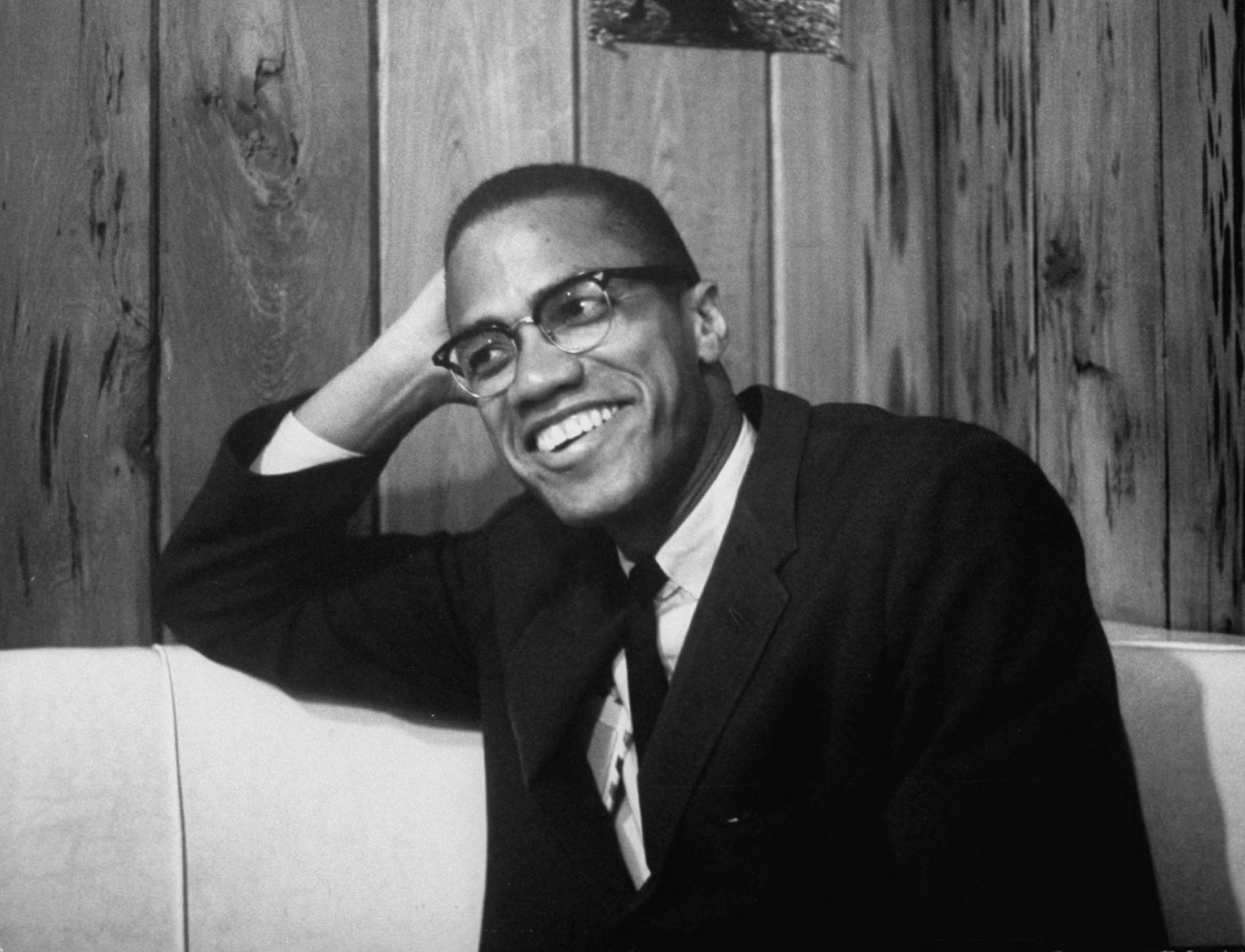
Reflecting on the 100th Birthday of Malcolm X


On May 19, 2025, we commemorate the 100th birthday of el-Hajj Malik el-Shabazz, most commonly known as Malcolm X. A visionary leader before his tragic assassination in 1965, X’s legacy continues to inspire people facing social injustice across the globe. His story and words have left a powerful testament explored in many books, films, and documentaries since his passing. 

I was about ten when my dad showed me a copy of The Autobiography of Malcolm X and said it was a book that every Black man should read. I immediately tried to dive into it but was too young to comprehend the text and grapple with the depth of subjects that arise in the book. It wasn't until high school and again in college, that I was able to really sit with The Autobiography of Malcolm X. The autobiography, co-written with Alex Haley and posthumously released in 1965, is considered the most comprehensive account of X's life. It takes readers from X's childhood in Michigan to his rise as one of the world's most influential figures in the 1960s. The vivid first-person narration brings readers into the perspective of X at these different points in his life. I've heard many people describe the impact The Autobiography of Malcolm X had on them. One common theme described is the drastic transformation that occurs from X's life as a street hustler to his leadership role in the Nation of Islam, departure from the organization, and pilgrimage to Mecca. 

Through X's story, we see the pain that is both necessary for and often a product of growth. For example, X's imprisonment led to his embarkment on a quest for knowledge and spiritual transformation. In college, an English professor of mine assigned reading from an excerpt of The Autobiography of Malcolm X titled, "Learning to Read". In the excerpt, X describes teaching himself to read in prison by copying from a dictionary. He states, "I could for the first time pick up a book and read and now begin to understand what the book was saying. Anyone who has read a great deal can imagine the new world that opened... In fact, up to then, I never had been so truly free in my life." From this brief but powerful quote, we see the significant shift in X's outlook during that time. As much as we learn about the positive aspects of transformation in X's life, The Autobiography of Malcolm X also recounts the resistance he faced separating from the organization that changed his life and in which he changed the lives of countless others. As X separated from the Nation of Islam, he faced hostile intimidation and remained a controversial figure in the mainstream press. Despite a more universal lens and willingness to work with leaders across organizations, X faced backlash for speaking truth to power.

On the 100th birthday of Malcolm X, we have an opportunity to celebrate and reflect on the legacy of a man that continues to be felt 60 years after his passing. As a leader, he fearlessly advocated for the causes of his people at a time when society relegated their sufferings to the margins. He demonstrated a journey of self-transformation that inspires people overcoming incarceration, addiction, and other struggles. Anytime I hear one of his speeches or interviews, the conviction in his voice alone inspires me to lead a life of purpose. Malcom X consistently spoke his truth no matter how uncomfortable that truth made others feel. We can only imagine what further impact Malcolm X would have made had his life not been tragically cut short at age 39. What's for certain, is that there is a lot to be learned from the life and legacy he left behind. Let us continue to uphold the memory of Malcom X and other leaders whose powerful life stories can enrich our own. 

Friday, March 1, 2024

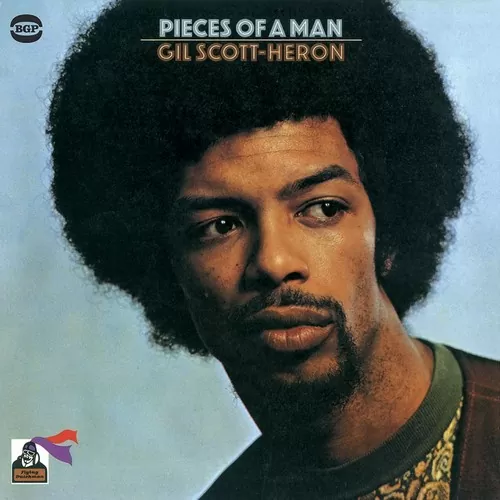
Classic Album Reflection: Pieces of a Man


 Once in a while, we come across art that encapsulates a moment in history. These works have the power to seemingly transport us to the period in which they were created, imparting the perspective of a time that we've never experienced. This is how I felt when I first heard Gil-Scott Heron's debut studio album, Pieces of a Man. Released in 1971, the album is a genre-bending 11-track journey containing elements of soul, blues, jazz, funk, and spoken word. Through each song, Scott-Heron melodically grapples with topics ranging from social inequalities to the personal struggles of addiction. The most widely known track on the album is the opening "The Revolution Will Not Be Televised", which has been immortalized for its poetic call to action. Scott-Heron has expressed that the song is about the change that you must make in your mind before you can change the way that you live. At the conclusion of this track, we transition into the serene “Save the Children”, one of my favorite songs on the album. The lyrics serve as a captivating plea to make the world a better place for the youth that follow in our footsteps. Scott-Heron sings “right now they seem to play such a small part of the things that they’ll soon be right at the heart of.” I appreciate the way in which Scott-Heron conveys emotion through his vivid lyricism. This emotion helps the listener feel the gravity of issues that he grapples with through each song. On the title track, “Pieces of a Man”, we hear a narrator recount the tumultuous experience of his father being laid off. He sings “I saw him go to pieces, he was always such a good man.” In the closing track, “The Prisoner”, Scott-Heron articulates the damage caused to a family when a man is “hounded by hatred and trapped by fear.” The song seems to describe both a literal and figurative prison that has left the man feeling unseen and unheard. When we consider the context in which Pieces of a Man was released in the early 1970s, the subject matter on this album is even more compelling. This period followed the strife of the 1960s and saw a carryover of the Vietnam War, the Black power movement, and the dawning of an economic recession. This atmosphere is conveyed through tracks like “A Sign of the Ages” and “The Needle’s Eye”. On the latter, Scott-Heron sings “All the millions spent for killing, seems the whole world must be dying; all the children who go hungry, how much food we could be buying.” The song captures the sorrow of someone observing these world crises with little power to change them. While societal issues are a prominent theme on the album, Scott-Heron also provides tracks that are more introspective. Songs like “Home Is Where the Hatred Is” and “I Think I’ll Call It Morning” paint the picture of a man seeking to find solace within his environment. We also get songs like “Lady Day and John Coltrane” and “When You Are Who You Are” that are both uplifting and reassuring. The breadth of emotions and subject matter on this album certainly fits the title. Pieces of a Man showcases the complexities within an individual just trying to make it through life. Scott-Heron demonstrates the ebbs and flows of the human experience through each track in a way that allows the listener to step into the world as he sees it. On “Or Down You Fall”, Scott-Heron sings “and now you know I’m only human instead of all the things I’d like to be, the world is just a simple circle, you’ve got to keep on turning.” These lines stand out to me because they demonstrate the power in learning the “pieces” of a person’s story. Through this learning we build a deeper appreciation of that person’s humanity. People, like the world, are much more complex than we perceive them to be.  Over 50 years later, Pieces of a Man contains messages that I believe can inspire and connect with people today. 

Wednesday, February 13, 2019

Book Reflection: Becoming by Michelle Obama


My most recent read is Becoming by former first lady, Michelle Obama. The book is a memoir that covers Obama's early life and years in the White House. Through her retelling of past life stories, she provides readers with insight into the experiences that made her the woman she is today. From home piano lessons in Chicago to state visits at Buckingham Palace, Mrs. Obama paints vivid recollections of some of her life's most meaningful memories. I learned a great deal through reading Becoming and gained a newfound respect for the position of first lady. I enjoyed the behind-the-scenes stories about the campaign trail and life inside the White House. This memoir is very honest and helps readers see the humanity in one of the most prominent figures of our time. As a college student, reading this book was very impactful, as it exemplified the surprises that life can present. I found her early quest for fulfillment and meaning to be relatable, as I often ask such questions of myself today. It was also nice to read about her interactions with Americans throughout the years. She beautifully writes about the families, children, and service members that helped shape her experience as first lady. Mrs. Obama's commitment to making a difference during her time as first lady was truly amazing. In an unpaid position, she fought relentlessly for the causes of childhood obesity, healthy eating, female education, and college accessibility. She was able to gracefully balance the demands of being a public figure, a mentor, a wife, and a mother. Through the telling of her story, Michelle Obama encourages others to appreciate the uniqueness and authencity in their own.  Becoming is a truly inspiring memoir that can be enjoyed by people of any background. I highly recommend checking this book out for yourself. Feel free to order using the link below. Thanks for reading!

https://www.barnesandnoble.com/w/becoming-michelle-obama/1128038172?ean=9781524763138#/

Friday, August 31, 2018

My Awakening


It seemed like any ordinary day in my middle school experience. I had taken the two-hour bus ride from home, with my sights set on finishing my seven-hour shift and returning back to my PlayStation. Little did that young twelve-year-old know, that the perception through which he viewed society and himself would on that day change forever. Up to that particular day in my life, I innocently viewed my world as a place where other’s perception of me was solely based on my character. I had heard of America’s dark past, but I naively believed that we had all overcome the ludicrous sentiments that were prevalent in the time of my grandparents and earlier generations. It was not until that morning period in sixth-grade language arts that I realized my appearance was subject to being associated with cruel and demeaning stereotypes.

My teacher was introducing the class to a new research assignment. It was a paper in which we were to study the neurological effects of any topic of choice. The example provided, which the teacher read aloud, was on a street drug known as “crack”. In one of the sentences of the example, the term “crack baby” was used. I then found out that one of my classmates said my name to a group of kids when that term was read by the teacher. As one of two Black students in the class, it was apparent that this remark was made about my race. Though long ago, I can still recall the painful sensation that took place when I heard those words. I felt isolated from the rest of my classmates, consumed by a combination of anger and sadness. This event marked a dramatic shift in my mindset.

From that day on, I never truly felt accepted into American society. It showed me that no matter how intelligent, successful, or well-mannered I thought myself to be, I could still encounter people that sought to confine my existence within their lines of distasteful preconceived generalizations. I was moved to discover how such generalizations could be made on something as trivial as skin color. I began to read books that elevated my consciousness of the Black American experience. It was comforting to see how others have encountered similar experiences to the one I had on that day in sixth grade. I became more aware of the atrocities that have affected Black Americans for centuries and I even viewed myself in a different light. With my life I was working to prove a more positive perception of Black Americans.

Though spawned from a negative experience, I consider my altered state of perception to have had a desirable impact. It motivated me to discover more about my identity as a Black American. It taught me that America’s dark history still seeps through the cracks into our current society. This altered state of perception was vital for my growth towards viewing the society in which I live through a more enlightened lens.

Friday, July 20, 2018

Book Recommendation: My Bondage and My Freedom

See the source image

One of my most recent reads is the second autobiography written by Frederick Douglass titled, My Bondage and My Freedom. The book is a thrilling first-person account about the life of Douglass through his years as a slave and his journey to becoming a freeman. I learned a great deal about Douglass through reading this book and was inspired by his turbulent quest to liberty. He truly transformed his life by educating himself and sought to dedicate his life toward fighting against the slave system. In My Bondage and My Freedom, Douglass provides readers with a window into his thoughts as he faced abuse from slave masters, criticism against his intellect, and inner-conflict as he sought to emancipate himself from the bondage that had held him captive since birth. Through reading this account, I believe we can gain great insight into this period of our nation's history as well as a deeper appreciation for the many individuals that have heroically sought to provide all Americans with the rights to life, liberty, and the pursuit of happiness. The life of Frederick Douglass is an extremely intriguing story, and I could definitely see a great film being adapted from this autobiography. I strongly recommend checking out this compelling book or at least doing some research on the life of Frederick Douglass. Thanks for reading!

https://www.barnesandnoble.com/w/my-bondage-and-my-freedom-frederick-douglass/